
North Carolina’s college towns, particularly Chapel Hill and Greensboro, pulse with vibrant energy, blending academic prestige, cultural richness, and economic opportunity. For lifelong friends seeking to invest together, co-buying a home in these areas offers a unique chance to build wealth, enjoy campus vibes, and tap into robust rental markets driven by students, faculty, and young professionals. Chapel Hill, home to the University of North Carolina (UNC), and Greensboro, anchored by UNC Greensboro and North Carolina A&T, boast affordable housing, strong job growth, and a steady influx of renters, making them ideal for joint homeownership. In 2025, with North Carolina’s housing market stabilizing, friend groups can leverage first-time buyer programs, historic tax credits, and rental income potential to create a rewarding shared investment.
This article explores the benefits of joint homeownership in Chapel Hill and Greensboro, focusing on market trends, rental income opportunities, campus lifestyle advantages, and practical tips for friends to navigate co-ownership successfully. By pooling resources and planning strategically, lifelong friends can turn their shared vision into a profitable and enjoyable venture.
The Allure of College Towns for Joint Homeownership
Chapel Hill and Greensboro embody the quintessential college town experience. Chapel Hill, with a population of 61,960 and a student body of 31,640 at UNC, is renowned for its law and medicine programs, vibrant Franklin Street, and cultural hubs like the Carolina Performing Arts Center. Greensboro, with 300,000 residents and 28,021 students across multiple universities, thrives on its visual arts scene, proximity to Winston-Salem, and growing tech sector. Both towns attract diverse populations—students, faculty, and professionals—creating a dynamic rental market and a lively community atmosphere.
Co-buying a home in these towns allows friends to split costs, making homeownership accessible in markets where median prices are $436,641 in Chapel Hill and $253,202 in Greensboro. For example, four friends buying a $400,000 home in Chapel Hill could each contribute $100,000 toward the down payment and closing costs, significantly reducing individual financial strain. The rental potential is substantial: Chapel Hill’s average one-bedroom rent is $1,654, while Greensboro’s is $1,199, offering strong cash flow for co-owners. Additionally, the campus vibe—think Tar Heel basketball games, art galleries, and local festivals—creates an enriching lifestyle that strengthens friendships.
Market Trends in Chapel Hill and Greensboro for 2025
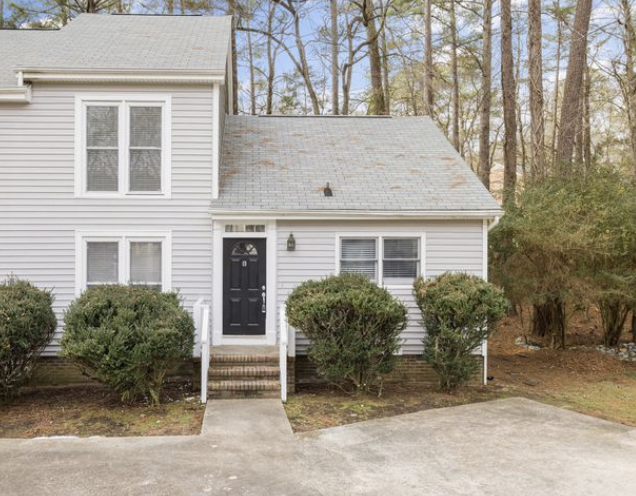
North Carolina’s housing market in 2025 is shifting toward balance, favoring buyers. Statewide, inventory rose 25.7% year-over-year, reaching 5.7 months of supply, a buyer’s market threshold. In Chapel Hill, part of the Raleigh-Durham metro, median home values are $436,641, up 98.5% since 2015, but flat or up 2-3% for 2025, with increased listings (1,200 in Durham County) providing leverage. Greensboro’s median home value is $253,202, 20% cheaper than the national median, with a 20% increase in values last year and 80% since 2015. Inventory in Greensboro is up 24%, with 1,500 listings in June, the highest in a decade.
These trends benefit co-buyers. In Chapel Hill, single-family homes near UNC start at $350,000, while condos in areas like Carraway Village are $300,000. In Greensboro, homes in neighborhoods like College Hill or Fisher Park, near UNC Greensboro, start at $200,000, ideal for fixer-uppers or rentals. The high renter population—49% in Chapel Hill and 38% in Greensboro—ensures steady demand, driven by students and professionals. Both towns offer tax incentives and grants, such as Durham’s Affordable Housing Loan Program or Greensboro’s Housing Connect, enhancing affordability for joint purchases.
Rental Income Potential in College Towns
The rental market in Chapel Hill and Greensboro is a key draw for co-buyers. Chapel Hill’s proximity to UNC drives demand for student and faculty housing, with median gross rents at $1,589 for a two-bedroom home. A 3-bedroom home renting for $2,500/month yields $30,000 annually, or $7,500 per friend for a group of four. Short-term rentals (STRs) on platforms like Airbnb are lucrative during basketball season or commencement, with nightly rates of $150-$300. However, Chapel Hill’s STR ordinances require owner occupancy or permits, so friends must plan compliance.
Greensboro’s rental market is equally robust, with median gross rents at $1,199 for a two-bedroom. A 3-bedroom home near North Carolina A&T renting for $1,800/month generates $21,600 annually, or $5,400 each for four friends. The city’s 51.3% homeownership rate means a strong renter base, bolstered by 16 colleges in the Piedmont Triad. Investors note Greensboro’s price-to-rent ratio as one of the state’s best, offering high cash flow. STRs are less restricted than in Chapel Hill, but saturation risks lower occupancy rates (60-70%).
To maximize income, friends can target multi-bedroom homes or duplexes. In Chapel Hill, a $400,000 duplex near Franklin Street could rent for $3,000/month, while in Greensboro, a $250,000 triplex near UNC Greensboro could yield $2,400/month. Co-owners can self-manage rentals to save on fees (20-30% for agencies) or hire firms like Yellow House Management for student housing expertise.
First-Time Buyer Programs for Friend Groups
North Carolina offers several programs to support first-time buyers, accessible to friend groups as joint applicants, particularly in college towns. The North Carolina Housing Finance Agency (NCHFA) is a primary resource.
- NC Home Advantage Mortgage This program offers 30-year fixed-rate mortgages (FHA, VA, USDA, or conventional) with up to 3% down payment assistance ($9,000 for a $300,000 home, or $2,250 each for four friends). The assistance is a 0% interest, deferred second mortgage, forgiven after 15 years if the home remains the primary residence. Eligibility includes:
- Minimum credit score of 640.
- Combined household income at or below 80-120% of county AMI ($108,000 in Orange County, $96,000 in Guilford County for four).
- Debt-to-income ratio below 43%.
- Homebuyer education course.
This suits groups buying condos in Chapel Hill’s Carolina Square or single-family homes in Greensboro’s College Hill.
- NC 1st Home Advantage Down Payment Offering up to $15,000 for first-time buyers or veterans, this 0% interest loan is forgiven 20% annually from years 11-15. It’s ideal for homes in targeted census tracts, common in Greensboro’s reinvestment areas, with a $384,750 single-family limit. Four friends could split $3,750 each, covering most of a 3.5% FHA down payment.
- Community Partners Loan Pool (CPLP) The CPLP provides up to $50,000 for low-income buyers (80% AMI), combinable with NCHFA mortgages. For a $300,000 home in Greensboro, this covers a significant down payment portion ($12,500 each for four), requiring six hours of homebuyer education and counseling.
- Local Programs
- Chapel Hill: The Community Home Trust sells homes 30-50% below market value ($200,000-$300,000), ideal for friends in neighborhoods like Northside. Income limits apply (80% AMI), and resale restrictions ensure affordability.
- Greensboro: The Housing Connect Homebuyer Assistance offers up to $15,000, with a $5,000 bonus for reinvestment areas like Cottage Grove, supporting fixer-uppers near campuses.
- Durham: Nearby Durham’s Affordable Housing Loan Program provides up to $50,000 for homes in historic districts, combinable with NCHFA aid.
Historic Tax Credits for Characterful Homes
Chapel Hill and Greensboro feature historic districts like Chapel Hill’s Cameron-McCauley or Greensboro’s Fisher Park, where homes qualify for tax credits. The federal Historic Rehabilitation Tax Credit offers 20% on qualified rehabilitation expenditures (QREs) for income-producing properties (e.g., rentals), up to $20,000 for a $100,000 renovation, split by ownership shares. North Carolina’s 15% credit for rentals or 10% for primary residences adds $15,000 or $10,000, respectively. For a $80,000 renovation in Fisher Park, two friends could claim $28,000 total ($14,000 each), covering 35% of costs. Applications require State Historic Preservation Office approval, adhering to preservation standards.
Campus Vibes: Lifestyle Benefits for Co-Owners

Living near UNC or UNC Greensboro immerses friends in a vibrant lifestyle. Chapel Hill’s Franklin Street offers gourmet dining, boutique shops, and Tar Heel game days, with luxury apartments like Carolina Square boasting pools and fitness centers. Greensboro’s arts scene, with galleries and live music near UNCG, fosters creativity, while proximity to the International Civil Rights Center & Museum adds cultural depth. Both towns have bike-friendly streets and public transit, reducing car reliance. Co-owners can enjoy game nights, local festivals, or quiet evenings in historic homes, strengthening bonds.
Teamwork Tips for Lifelong Friends
Successful joint homeownership requires clear planning to protect friendships and investments:
- Co-Ownership Agreement Draft a legally binding agreement detailing:
- Ownership shares (tenancy in common for flexibility).
- Expense splits (mortgage, taxes, utilities, renovations).
- Rental management and income distribution.
- Exit strategies (buyouts at appraised value).
- Dispute resolution (mediation before litigation).
For example, two friends buying a $350,000 Chapel Hill home might split costs 60/40 based on contributions, with rental income divided similarly. Legal fees ($1,000-$2,000) ensure clarity.
- Form an LLC An LLC protects assets and simplifies tax credits. Setup costs $125 in North Carolina, with a $200 annual fee. The operating agreement outlines roles, like one friend managing rentals and another handling repairs.
- Divide Responsibilities Assign tasks based on strengths: one friend oversees contractors for a Greensboro fixer-upper, another navigates grant applications. Use tools like Asana for coordination.
- Budget for Costs A $350,000 home with a $1,800/month mortgage, $200 HOA, and $200 utilities costs $2,200/month, or $550 each for four. Renovations ($50,000) and taxes ($4,000/year) add $13,500 annually per friend, offset by $7,500 in rental income.
- Plan for Rentals Agree on self-management or hiring agencies (20% commission). Ensure compliance with local STR rules, especially in Chapel Hill.
Case Study: Friends in Chapel Hill Four friends, each earning $35,000, buy a $400,000 duplex near UNC. Their $140,000 combined income exceeds Orange County’s 80% AMI ($86,400), but they qualify for NCHFA’s $15,000 NC 1st Home Advantage ($3,750 each) and $20,000 federal tax credit for a $100,000 renovation ($5,000 each). They form an LLC, split costs equally, and rent the duplex for $3,000/month, yielding $9,000 annually per friend. One manages tenants, another handles maintenance. Their agreement includes a buyout clause, ensuring flexibility.
Conclusion

Joint homeownership in Chapel Hill and Greensboro offers lifelong friends a chance to invest in North Carolina’s vibrant college towns, leveraging 2025’s balanced market, rental income ($1,199-$1,654/month), and campus vibes. NCHFA programs, local grants, and historic tax credits reduce costs, while tenancy in common and LLCs provide flexibility. By crafting co-ownership agreements, dividing tasks, and planning for rentals, friends can build wealth and memories in these dynamic communities. Consult realtors, attorneys, and preservation experts to make your shared dream a lasting success.
Sources:
- North Carolina Housing Finance Agency: www.nchfa.com
- Community Home Trust: www.communityhometrust.org
- Real Estate Skills: www.realestateskills.com
- ApartmentGuide: www.apartmentguide.com
- Home Bay: www.homebay.com
- Xome: www.xome.com
- Durham Housing: www.durhamnc.gov
- Greensboro Housing Connect: www.greensboro-nc.gov